The Philosophy That Changes Everything: How Washoku Is Reshaping the American Dining Experience
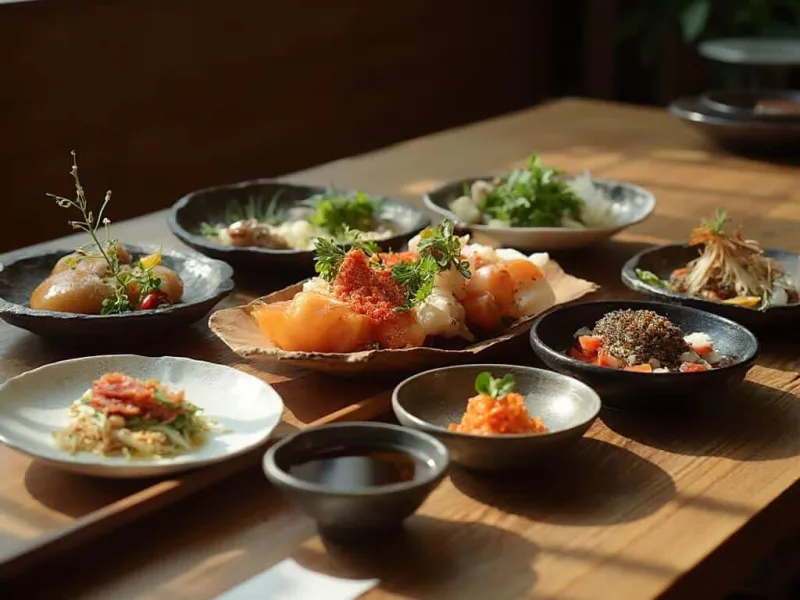
Photo: traditional Japanese washoku meal presentation kaiseki multiple dishes wooden table, via homecollective.org
In 2013, UNESCO made a decision that surprised many in the Western culinary world: it inscribed washoku — Japan's traditional dietary culture — on its list of Intangible Cultural Heritage of Humanity. For Japanese chefs and food scholars, the recognition was long overdue. For American diners, it marked the beginning of a deeper conversation about what it truly means to eat Japanese food.
Washoku is not simply a collection of recipes. It is a living philosophy — a set of deeply held values about how food should be grown, prepared, presented, and experienced. As authentic Japanese cuisine continues to find its footing in cities across the United States, a growing number of forward-thinking chefs and restaurateurs are discovering that washoku's core principles offer something that modern American dining has long been searching for: genuine intentionality at the table.
What Washoku Actually Means
The word itself translates loosely as "Japanese food harmony," though that rendering barely scratches the surface. Washoku encompasses a worldview in which the act of eating is inseparable from nature, community, and aesthetic consciousness. It emerged over centuries in a country where geography — mountainous terrain, abundant coastlines, and four distinct seasons — shaped not only what people ate, but how they thought about nourishment itself.
At its core, washoku rests on five foundational principles that govern everything from a humble bowl of miso soup to an elaborate kaiseki banquet. Understanding these principles is the first step toward appreciating why a truly authentic Japanese dining experience feels fundamentally different from any other cuisine in the world.
The Five Principles of Washoku
1. Shun — The Discipline of Seasonality
No principle is more central to washoku than shun, the practice of cooking with ingredients at the precise peak of their seasonal availability. Japanese culinary culture identifies not merely four seasons but twenty-four micro-seasons, each associated with specific produce, fish, and preparation techniques. A chef who honors shun does not serve asparagus in October or matsutake mushrooms in March. The calendar is the menu.
For American chefs operating in the farm-to-table tradition, shun resonates deeply — yet washoku pushes the concept further, demanding not just seasonal awareness but a kind of reverence for the fleeting nature of each ingredient's perfect moment. At Daikoku Ginza, this principle informs every seasonal menu rotation, ensuring that what arrives at your table reflects not just what is fresh, but what is right for this particular moment in the year.
2. Ichiju Sansai — The Architecture of Balance
Traditional Japanese meals are structured around the concept of ichiju sansai: one soup and three sides, served alongside rice. This deceptively simple framework is, in practice, a sophisticated nutritional and aesthetic balancing act. The three side dishes are chosen to offer contrast — in flavor, texture, cooking method, and color. Nothing on the table is redundant; everything exists in deliberate relationship to everything else.
American dining culture, which often prizes abundance and centerpiece proteins, finds in ichiju sansai a radically different logic. The meal is not built around a single star dish but around harmony. Diners at establishments that honor this structure frequently report a sense of satisfaction that is both physical and psychological — full without heaviness, nourished without excess.
3. Umami — The Fifth Dimension of Flavor
Though umami is now widely recognized in Western culinary circles, washoku was its original home. Japanese cooks spent centuries cultivating the deep, savory resonance found in dashi broth, aged miso, soy sauce, and fermented condiments long before the word entered the global food vocabulary. Umami is not a shortcut or an additive — in the washoku tradition, it is the patient result of careful fermentation, slow simmering, and ingredient selection.
For diners accustomed to bold, immediate flavors, authentic umami-forward cooking can feel like a revelation. It is a flavor that lingers, deepens, and rewards attention.
4. The Five Colors and Five Flavors — Visual and Sensory Completeness
Washoku holds that a complete meal should engage all five senses and incorporate five colors (white, black, red, yellow, and green) alongside five distinct flavor profiles (sweet, salty, sour, bitter, and umami). This principle transforms plating from decoration into meaning. The arrangement of food on a dish communicates care, intention, and cultural knowledge.
American chefs who have studied in Japan often describe this as the most transformative lesson they bring home — the understanding that how food looks is not vanity, but part of the nourishment itself.
5. Harmony with Nature and Community
Perhaps the most philosophical of washoku's principles is its insistence on situating the meal within a broader natural and social context. Food is prepared with gratitude for the land, sea, and seasons that produced it. Meals are shared experiences that reinforce family and community bonds. The phrase itadakimasu — spoken before eating — acknowledges the lives given so that the meal could exist.
In an era when American diners are increasingly conscious of food sourcing, environmental impact, and the social dimensions of eating, this dimension of washoku feels not merely traditional but urgently relevant.
How American Restaurants Are Responding
Across the United States — from the restaurant corridors of New York and Los Angeles to emerging food scenes in cities like Nashville, Denver, and Austin — chefs trained in Japanese culinary traditions are finding receptive audiences. American diners who have grown weary of novelty for its own sake are drawn to the quiet confidence of washoku-informed cooking: the restraint, the precision, the sense that every element on the plate has earned its place.
The movement is not about fusion or appropriation. The most compelling examples are restaurants that commit fully to the washoku framework — sourcing from Japanese-American farms, importing specific fermented products, training staff in the cultural context of each dish, and designing dining spaces that reflect the aesthetic values of wabi-sabi and ma (negative space).
What to Look for When Dining at an Authentic Establishment
If you are seeking a genuinely washoku-informed dining experience in America, a few markers are worth noting. Look for menus that change with the seasons — not quarterly, but more frequently. Observe the plating: is there deliberate use of color and negative space? Ask about the dashi — the foundational broth that underpins much of Japanese cooking. A kitchen that makes its own dashi from scratch is a kitchen that takes washoku seriously.
At Daikoku Ginza, these principles are not marketing language. They are the operating philosophy behind every dish we prepare and every dining experience we design. We believe that when American food lovers encounter washoku in its truest form, something shifts — a recognition that this ancient approach to eating speaks to something universal about the relationship between human beings, the natural world, and the profound act of sharing a meal.
The art of washoku is not a trend. It is a tradition that has endured for centuries because it is, at its heart, simply right.