Beyond Soy Sauce: Seven Japanese Pantry Staples That Belong in Every American Kitchen
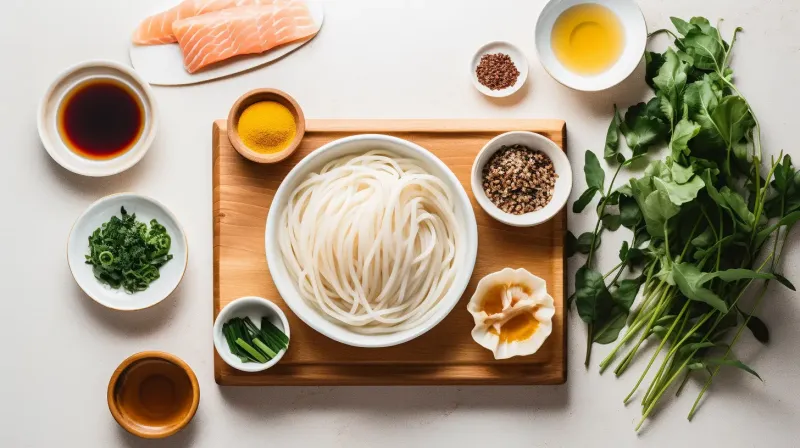
Photo: Japanese pantry ingredients mirin kombu bonito flakes sesame oil arranged flat lay, via digitalpress.fra1.cdn.digitaloceanspaces.com
There is a particular kind of frustration that visits the home cook who has followed a Japanese recipe faithfully — measured carefully, timed precisely — only to find that the finished dish lacks the rounded depth of its restaurant counterpart. The technique was sound. The protein was properly seared. And yet something essential is missing.
More often than not, that something is a pantry ingredient. Not a glamorous centerpiece item, but one of the quiet, foundational staples that Japanese professional kitchens — and Japanese home kitchens, for that matter — treat as indispensable. These are the ingredients that rarely appear on a menu description but do much of the flavor work behind the scenes.
At Daikoku Ginza, our chefs are frequently asked by guests how they might begin cooking Japanese food at home. The answer, almost invariably, begins not with technique but with pantry. Build the right foundation, and the techniques will follow naturally. What follows is a considered introduction to seven such ingredients — each with its own history, its own culinary logic, and a practical sourcing guide for American cooks ready to stock up.
1. Mirin: Sweetness With Substance
Mirin is a sweet rice wine used almost exclusively in cooking, and it is one of the most misunderstood ingredients in the Japanese pantry. It is not interchangeable with sugar, and it is not simply a sweetener. Produced by fermenting glutinous rice with koji mold and distilled shochu, mirin develops a layered sweetness that carries subtle floral and umami notes alongside its sugar content. When applied to heat, it also contributes to the lacquered, glossy finish that defines classic Japanese glazes and sauces.
In practical terms, mirin balances the sharpness of soy sauce in teriyaki preparations, softens the intensity of miso marinades, and adds a quiet depth to simmered dishes (nimono) that sugar simply cannot replicate. Look for hon mirin (true mirin) rather than mirin-style seasoning, which is a manufactured substitute containing additives. Hon mirin is available at most Asian grocery stores and increasingly through retailers such as Whole Foods, H Mart, and Amazon.
2. Kombu: The Sea's Quiet Contribution
Dried kelp harvested primarily from the cold waters of Hokkaido, kombu is the foundational umami ingredient in Japanese cooking. Its cell walls are dense with glutamic acid — the amino acid responsible for the savory, mouth-coating quality known as umami — and when steeped in water, it releases these compounds with remarkable efficiency.
Beyond dashi, kombu has applications that many American cooks have not yet discovered. A strip added to a pot of dried beans as they cook tenderizes the legumes and adds mineral depth to the resulting broth. Tucked beneath a piece of fish before refrigerating overnight, it draws out moisture and infuses a subtle oceanic savoriness — a technique known as kobujime. Kombu is shelf-stable for months and is available at Japanese grocery stores, Whole Foods, and specialty online retailers including Umami Insider and Japan Centre.
3. Katsuobushi (Bonito Flakes): Paper-Thin and Profoundly Flavorful
Katsuobushi — the shaved, dried, and fermented flesh of skipjack tuna — is among the most ancient preserved foods in Japanese culinary tradition, with records of its production dating back over a thousand years. The production process is elaborate: the fish is repeatedly smoked, dried, and inoculated with a specific mold strain that drives off residual moisture and concentrates flavor compounds over a period of several months.
The result is a hard, wood-like block that is shaved into translucent flakes of extraordinary complexity. Combined with kombu, these flakes form ichiban dashi, the cornerstone broth of Japanese cooking. Scattered over warm tofu or finished vegetables, they dance in the rising heat in a way that is as visually arresting as it is delicious. Katsuobushi is available pre-shaved in sealed bags at most Asian grocery stores and online, making it one of the more accessible Japanese pantry items for American shoppers.
4. Shichimi Togarashi: Japan's Answer to the Spice Blend
Where American spice culture tends toward single-note heat — cayenne, red pepper flakes, hot sauce — Japanese cuisine has long embraced the layered complexity of shichimi togarashi, a seven-spice blend with roots dating to seventeenth-century Edo (present-day Tokyo). The precise composition varies by producer and region, but the blend typically includes red chili pepper, sansho (a relative of Sichuan peppercorn with a citrusy, numbing quality), roasted orange peel, black and white sesame seeds, hemp seeds, and nori flakes.
The result is a condiment that delivers warmth, citrus brightness, nuttiness, and a faint tingle simultaneously — a complexity that elevates grilled meats, noodle soups, and even roasted vegetables in ways that straight heat cannot. Shichimi togarashi is found in the spice aisle of most Asian grocery stores and is increasingly stocked by mainstream American retailers. S&B brand is widely distributed and a reliable starting point.
5. Rice Vinegar: Acidity That Knows Its Place
Rice vinegar is milder, rounder, and less assertive than the distilled white or apple cider varieties that dominate American pantries. Produced from fermented rice, it carries a delicate sweetness beneath its acidity that allows it to brighten dishes without overwhelming them — a quality that makes it essential in sushi rice preparation, sunomono (vinegared salads), and dipping sauces.
American cooks who have not yet made the switch will notice an immediate difference in any recipe that calls for a light, clean acid. A splash of rice vinegar in a coleslaw dressing, a quick-pickle brine, or a pan sauce adds lift without aggression. Both seasoned and unseasoned varieties are available; unseasoned offers greater versatility. Marukan and Mizkan are two widely distributed brands found in most grocery stores nationwide.
6. Toasted Sesame Oil: Finishing, Not Cooking
The distinction between cooking oil and finishing oil is fundamental in Japanese cuisine, and nowhere is it more clearly illustrated than with toasted sesame oil. Cold-pressed from roasted sesame seeds, it carries an intensely nutty, aromatic character that dissipates rapidly under high heat — making it unsuitable as a cooking fat but extraordinary as a final flourish.
A few drops drizzled over a completed bowl of ramen, stirred into a dipping sauce, or folded into a cold noodle salad just before serving transform the dish with a depth that is immediately recognizable. Japanese-style toasted sesame oil (darker and more intensely flavored than its Chinese counterparts) is available at Asian grocery stores and through mainstream retailers. Kadoya is a widely trusted brand available across the United States.
7. Dried Shiitake Mushrooms: Umami in Reserve
Fresh shiitake mushrooms are valuable; their dried counterparts are transformative. The dehydration process concentrates the mushrooms' guanylic acid content — a nucleotide that produces umami synergy when combined with the glutamates in kombu or the inosinates in katsuobushi. The soaking liquid left behind after rehydrating dried shiitake is itself a potent broth, rich enough to form the base of vegetarian dashi or to deepen any braise or soup.
Dried shiitake are among the most shelf-stable and widely available Japanese pantry items in America, found in the produce or international aisle of most mainstream supermarkets. Stored in an airtight container away from light, they keep for up to a year without any loss of quality.
Building Your Pantry: A Practical Starting Point
For the American cook approaching this list for the first time, the temptation to acquire all seven items simultaneously is understandable — but unnecessary. Begin with mirin, kombu, and katsuobushi. These three ingredients alone unlock the logic of dashi and provide the foundation for a remarkable range of authentic Japanese preparations. Add shichimi togarashi and dried shiitake as a second wave, and the pantry begins to feel genuinely capable.
For sourcing, H Mart (with locations across the East Coast, Midwest, and Southeast) and Mitsuwa Marketplace (concentrated in California, Illinois, and New Jersey) offer the broadest selection at the best value. Amazon carries most of these items through reputable sellers, and specialty online retailers such as Japanese Pantry and Umami Insider ship nationwide.
Authentic Japanese cooking does not demand exotic technique or professional equipment. What it does demand is the right ingredients — and the willingness to let them do their work.