Sake Awakening: Why America's Most Adventurous Diners Are Leaving Wine Behind
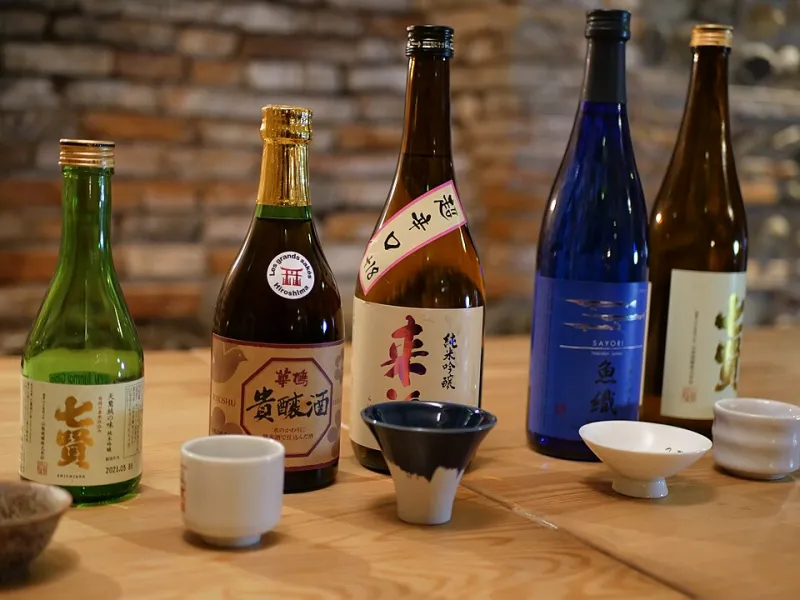
Photo: Culture Japon, CC BY-SA 4.0, via Wikimedia Commons
For decades, sake occupied an awkward corner of the American dining experience — ordered almost reflexively alongside a sushi platter, served in a small porcelain vessel, and largely misunderstood. Yet something has shifted. Across the country, from intimate omakase counters in New York to neighborhood Japanese restaurants in Portland and Chicago, sake is claiming its rightful place as one of the most sophisticated beverage pairings available to the modern American diner.
At Daikoku Ginza, we believe that understanding sake is inseparable from understanding Japanese cuisine itself. The two evolved together over centuries, shaped by the same rice fields, the same seasonal rhythms, and the same cultural commitment to balance and refinement.
Beyond the Warm Carafe: Understanding What Sake Actually Is
The first misconception worth addressing is temperature. While warm sake — known as kanzake — has its place, particularly in winter months and with heartier dishes, many of Japan's finest sake expressions are best enjoyed chilled or at room temperature. Serving a premium junmai daiginjo warm would be roughly equivalent to heating a glass of Burgundy: technically possible, but a genuine loss.
Sake is brewed from four essential ingredients — rice, water, koji mold, and yeast — yet the variables within that simple framework produce an extraordinary range of flavor profiles. The degree to which the rice is polished, called the seimaibuai, determines the category of sake and profoundly influences its character. A daiginjo, with its rice polished to at least 50 percent of its original size, tends toward floral, fruit-forward elegance. A junmai, made without added alcohol and with less aggressive polishing, often delivers earthier, more robust notes that pair beautifully with savory preparations.
Regional geography adds another layer of complexity. Sake brewed in Niigata Prefecture, where cold winters and soft water abound, tends to be clean and dry — what the Japanese call tanrei karakuchi. By contrast, sake from Hiroshima, where the water is notably softer and mineral-rich, frequently carries a rounder, slightly sweeter character. These regional distinctions are as meaningful as the difference between a Napa Valley Cabernet and one from the Willamette Valley in Oregon.
The Pairing Logic That Changes Everything
One of sake's most remarkable qualities as a pairing beverage is what it does not do. Unlike many wines, sake contains no sulfites and virtually no tannins, making it exceptionally gentle on the palate. It does not clash with the delicate umami compounds found throughout Japanese cuisine, and it rarely overwhelms. This is not passivity — it is precision.
The traditional Japanese concept of ma, or harmonious space, applies beautifully to sake pairing. The beverage does not compete with food; it creates a complementary conversation.
For lighter dishes such as sashimi, chilled tofu, or steamed clams, a ginjo or daiginjo — particularly one with notes of green apple, white peach, or fresh melon — provides a clean, refreshing counterpoint. The sake lifts the dish without masking the natural sweetness of the seafood.
For grilled preparations — yakitori, robata-style vegetables, or miso-glazed black cod — a junmai or honjozo with its fuller body and subtle earthiness mirrors the char and caramelization on the plate. The slightly savory backbone of these sake styles finds common cause with the Maillard reactions achieved over a charcoal flame.
For aged or fermented elements such as pickled vegetables (tsukemono), funazushi, or deeply seasoned braises, a yamahai or kimoto sake — produced through traditional labor-intensive brewing methods that encourage natural lactic acid development — brings a welcome acidity and complexity. These styles are often described as rustic or wild, and they are genuinely thrilling at the table.
Bringing the Izakaya Spirit Home
The izakaya — Japan's beloved tavern-style gathering place — is built around the idea that food and drink should encourage conversation, generosity, and unhurried pleasure. It is not a formal dining occasion; it is a philosophy of hospitality. Incorporating sake pairing into home entertaining is one of the most accessible ways to channel that spirit.
A few practical suggestions for the American home host:
-
Start with a flight. Offering guests three small pours — a junmai, a ginjo, and a nigori (unfiltered, slightly cloudy sake) — before the meal proper is an elegant and educational gesture. It requires minimal investment and generates immediate conversation.
-
Mind your glassware. Sake can be served in traditional ochoko cups, but it also performs beautifully in a white wine glass, which concentrates its aromatic compounds. For a daiginjo of particular elegance, a Burgundy-style glass is not an overreach.
-
Consider temperature as seasoning. Chilling a ginjo to around 45°F sharpens its fruit notes; allowing a junmai to reach 55°F softens its edges and expands its umami depth. Temperature is not incidental — it is a tool.
-
Pair regionally when possible. If you are serving a dish rooted in a specific Japanese culinary tradition, seek out a sake from the same region. This approach rarely disappoints and tells a more complete story at the table.
A Living Tradition in American Hands
It is worth noting that sake is no longer exclusively imported. American craft sake breweries have emerged in states including California, Vermont, and Oregon, producing expressions that reflect both Japanese technique and local terroir. This development mirrors the evolution of American craft brewing and winemaking — a genuine cultural synthesis rather than simple imitation.
At Daikoku Ginza, we regard sake not as an exotic novelty but as a living tradition worthy of the same reverence American diners extend to the finest European wines. The izakaya has always known this. It is time for the broader American table to follow.