Why the Quietest Restaurants Serve the Most Memorable Meals
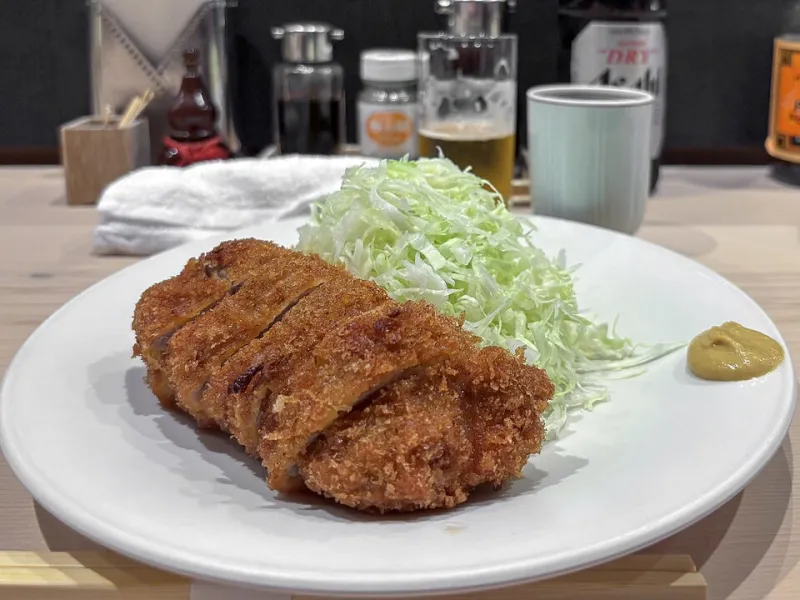
Photo: Dale Cruse from San Francisco, CA, USA, CC BY 2.0, via Wikimedia Commons
Walk into most American restaurants on a Friday evening and you will encounter a carefully engineered assault on the senses. Music calibrated to a specific tempo. Servers trained to fill every conversational lull. Tables dressed so completely that the food, when it finally arrives, must compete for your attention with candles, elaborate floral arrangements, and stacked ramekins of condiments you did not request. The prevailing assumption is that stimulation equals satisfaction—that a diner who is entertained is a diner who is pleased.
Japanese dining culture has operated on a fundamentally different premise for centuries. And the science, it turns out, has been quietly proving that premise correct.
The Concept of Ma: Space as an Active Ingredient
In Japanese aesthetics, the word ma (間) describes the meaningful pause—the interval between notes in music, the deliberate gap between objects in a room, the silence that gives a spoken sentence its weight. It is not absence. It is presence of a different order.
In a traditional Japanese dining room, ma manifests in ways that can initially unsettle the American diner. A single ceramic vessel placed off-center on a lacquered tray. A table surface that remains largely bare between courses. A server who delivers a dish, offers a brief explanation, and then withdraws without lingering for approval. These are not accidents of minimalism. They are calculated acts of attention—a form of hospitality that trusts the guest to inhabit the space that has been created for them.
At Daikoku Ginza, this philosophy informs every decision about how a meal unfolds. The table is not a stage to be filled but a canvas on which each dish can make its own uncluttered statement.
What Neuroscience Says About Noise and Taste
The relationship between environmental stimulation and flavor perception has attracted serious scientific attention over the past two decades. Research published in the journal Food Quality and Preference has demonstrated that high ambient noise levels measurably reduce the perceived sweetness and saltiness of food while increasing the sensation of crunchiness—a finding that partly explains why airline food tastes so flat at altitude, where engine noise compounds the effect of low cabin pressure.
More broadly, studies in the emerging field of gastrophysics—most prominently advanced by Oxford experimental psychologist Charles Spence—have shown that the brain does not process taste in isolation. It integrates sensory data from the entire environment: sound, light, the weight of the cutlery in your hand, the texture of the surface beneath your plate. A quieter, less visually cluttered setting does not merely feel more refined. It physiologically enables the diner to taste more precisely.
Japanese restaurant culture arrived at this understanding through observation and tradition rather than laboratory trials. But the convergence of ancient practice and contemporary neuroscience is striking, and it carries real implications for how Americans think about where and how they eat.
The Misreading of Minimalism in American Dining
The American restaurant industry has not ignored Japanese aesthetics—it has borrowed extensively from them. Exposed wood, ceramic vessels, austere plating, and muted color palettes now appear in dining rooms from Brooklyn to Scottsdale. But the borrowing has frequently been cosmetic. The visual grammar of ma has been imported while its underlying logic has been discarded.
A restaurant can feature handmade stoneware and still pipe in a playlist at conversation-disrupting volume. It can plate food with geometric precision and still seat tables so closely together that neighboring conversations become unavoidable. The result is a kind of aesthetic contradiction—surfaces that signal calm while the overall environment remains relentlessly stimulating.
True restraint in Japanese dining is systemic. It governs not just what the table looks like but how the room sounds, how quickly courses are paced, how much a server speaks, and how much silence is permitted to exist between the moment a dish arrives and the moment the diner is expected to respond to it. These are the details that transform a stylish meal into a genuinely meditative one.
The Role of Pacing and the Deliberate Pause
In kaiseki dining—Japan's most formal culinary tradition—the interval between courses is as considered as the courses themselves. A guest is not rushed. Nor are they entertained through the waiting. They are simply given time: time to finish, to reflect, to return their attention to the room and to themselves before the next dish arrives.
This pacing serves a practical function beyond philosophy. The palate, when given a moment of quiet between stimuli, resets. Flavors encountered after a pause register with greater clarity than those delivered in rapid succession. A chef who understands this does not merely sequence dishes for culinary logic—they sequence them for perceptual effect, treating time itself as part of the recipe.
American dining culture, shaped by the economics of table turnover and the cultural anxiety about silence, tends to resist this approach. The pause is treated as a problem to be solved rather than a gift to be offered. Yet the diners who have experienced genuinely unhurried Japanese service frequently describe it as transformative—not because anything dramatic occurred, but because nothing did, and that nothing turned out to be everything.
Recreating the Meditative Table at Home
The principles behind Japanese dining restraint are not confined to restaurants. They can be practiced at any American dinner table, and the effort requires less renovation than you might expect.
Begin with sound. Before a meal, silence or significantly lower any background music. Allow the room to carry its natural ambient noise—the occasional sound of cutlery, a glass being set down, a quiet exchange between those at the table. Notice how quickly the food becomes more present when it is not competing with a soundtrack.
Next, clear the table of everything that does not belong to the meal itself. Remove the decorative clutter, the excess condiments, the items placed there out of habit rather than necessity. Set each place with only what will be used. The effect is immediate: the food, when it arrives, occupies the visual field without competition.
Pace the meal deliberately. Do not rush from one course to the next. Allow a genuine pause between dishes—long enough to feel slightly unusual if you are accustomed to American dining rhythms. That discomfort is the sensation of your attention recalibrating.
Finally, resist the impulse to fill silence with commentary. Japanese dining culture holds that a dish which is working does not require constant narration. Taste carefully. Speak when you have something worth saying. The meal will reward this restraint in ways that are difficult to articulate but impossible to mistake.
Stillness as a Form of Generosity
There is a hospitality argument embedded in all of this that American restaurants would do well to consider. The instinct to fill every moment—with music, with service, with spectacle—comes from a genuine desire to please. But it rests on an assumption that guests cannot be trusted with space, that silence will be experienced as neglect rather than respect.
Japanese dining culture makes the opposite wager. It assumes that a guest who has been given quiet, given room, given an uncluttered surface and an unhurried pace, will arrive more fully at the meal in front of them. It treats attention as the most valuable thing a diner can bring to the table—and creates the conditions in which that attention can actually flourish.
At its best, this is what a Japanese restaurant offers that no amount of ambient energy can replicate: the experience of tasting something completely, without interference, in a room that has been designed to get out of the way.