After Hours, Before Dawn: Why America Craves a Bowl of Broth at Midnight
There is a particular hour in American cities when the dining landscape narrows to a trickle. The bistros have dimmed their lights, the taco trucks have pulled away, and the only glow on the block often comes from a pizzeria's warming case. But in recent years, a quiet transformation has taken place in that nocturnal economy. increasingly, the brightest light at 1 a.m. belongs to a ramen shop.
At Daikoku Ginza, we spend a great deal of time thinking about how Japanese food traditions take root on American soil. Few stories illustrate that grafting process better than the rise of the late-night noodle counter — a phenomenon that says as much about American nightlife as it does about Japanese hospitality.
The Old Midnight Menu
For decades, the American after-hours meal was defined by convenience and fat. Pizza by the slice, greasy diners, drive-thru burritos. These foods served a purpose: they were fast, cheap, and required no decisions from a customer whose judgment had been softened by the evening.
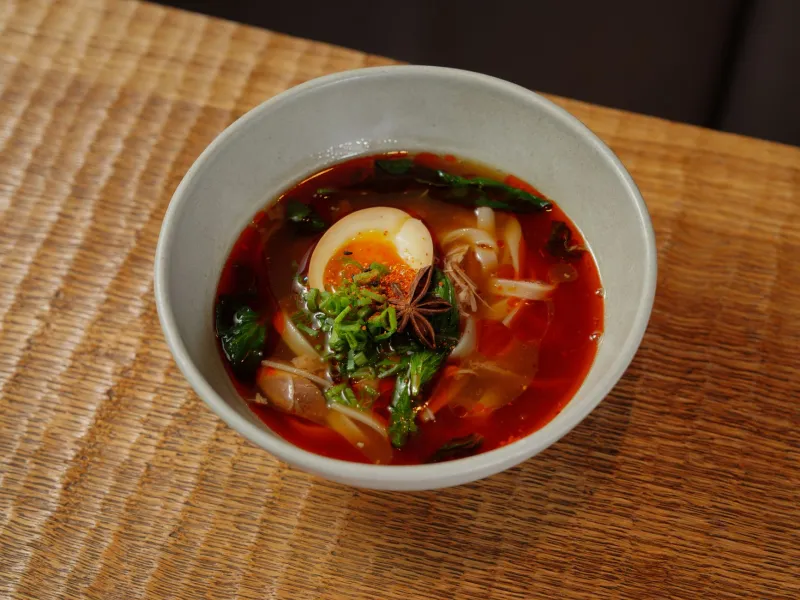
What changed? In part, demographics. A generation of American diners raised on anime, Tokyo travel, and the ramen boom of the 2010s arrived at adulthood with different cravings. They wanted something warm and restorative, not merely caloric. And in part, it changed because Japanese restaurateurs saw an opening. A bowl of tonkotsu ramen, after all, is not so different from the soba shops and ramen-ya of Tokyo's own nightlife districts — places designed explicitly for the salaryman staggering toward the last train.
Broth as a Business Model
Running a late-night kitchen is an act of endurance. Broths for tonkotsu ramen simmer for twelve hours or more, which means the day's work begins before dawn even as the previous night's service ends. Chefs who keep midnight hours describe a rhythm unlike any other in the industry: a slow build through the dinner rush, a second wind around bar-close, and a final, almost meditative stretch from one to three in the morning, when the room fills with line cooks off shift, nurses ending their rounds, and night owls seeking something honest.
Several owners we've spoken with describe the late-night crowd as their most loyal. These are not tourists chasing a trend; they are regulars who learn the menu by heart and greet the staff by name. In Japanese dining culture, the neighborhood late-night counter — the tachinomi, the midnight ramen-ya — has always occupied this role. America, it turns out, had the same hunger waiting.
The Donburi Effect
Not every late-night Japanese operation centers on noodles. In college towns from Ann Arbor to Eugene, donburi counters have found a foothold — simple rice bowls topped with simmered pork, marinated chicken, or raw fish over seasoned rice. The appeal is structural: a donburi is a complete meal in a single vessel, assembled in minutes, priced for a student budget, and satisfying in a way few late-night options can match.
The rice bowl also travels well. Unlike a delicate plate of sushi, a donburi survives the takeout container, which has made it a favorite of delivery apps and dorm-room orders alike. Some operators report that their midnight delivery volume now rivals their dine-in traffic — a shift with real implications for how small Japanese kitchens staff and schedule their operations.
A Midnight Pilgrimage: Where to Go
For readers planning their own after-hours expedition, a few regional standouts suggest the breadth of the movement:
- Las Vegas, Nevada: After the casinos empty, ramen counters along Spring Mountain Road keep rolling well past 2 a.m., serving a night-shift crowd of dealers, performers, and servers.
- New York, New York: The East Village and Midtown's ramen corridors have long anchored the scene, but late-night counters in Sunset Park and Flushing now draw devoted crowds at hours most restaurants never see.
- Austin, Texas: A city built on late nights, Austin's Japanese kitchens serve tonkotsu and spicy miso bowls to a bar crowd that lines up on East Sixth Street annexes well after midnight.
- Los Angeles, California: The spiritual home of American ramen culture. Little Tokyo and the Sawtelle corridor offer counters that never truly close the kitchen, alongside late-night izakaya serving karaage and rice bowls until the small hours.
- Chicago, Illinois: West Loop and Argyle Street counters have extended hours to catch the post-show and hospitality crowds, with rich shoyu bowls that rival any in the Midwest.
- Portland, Oregon: A late-night cart and counter culture, where Japanese comfort food slots naturally into the city's nocturnal eating habits.
More Than a Meal
There is a temptation to read the midnight ramen boom as another food trend, destined to fade. But the deeper current here is older and more durable. In Japan, the late-night meal is an institution — a moment of solitude or companionship at the end of a long day, when the food must be warm, the welcome must be genuine, and nothing more need be said.
American cities, with their own long shifts and restless nights, have discovered they needed exactly the same thing. The 3 a.m. bowl is not a fad. It is a missing piece of the American dining landscape, finally filled — one steaming bowl at a time.