Rice, Soup, Fish, Repeat: How Japan's Set-Meal Tradition Is Quietly Winning Over American Lunch Tables
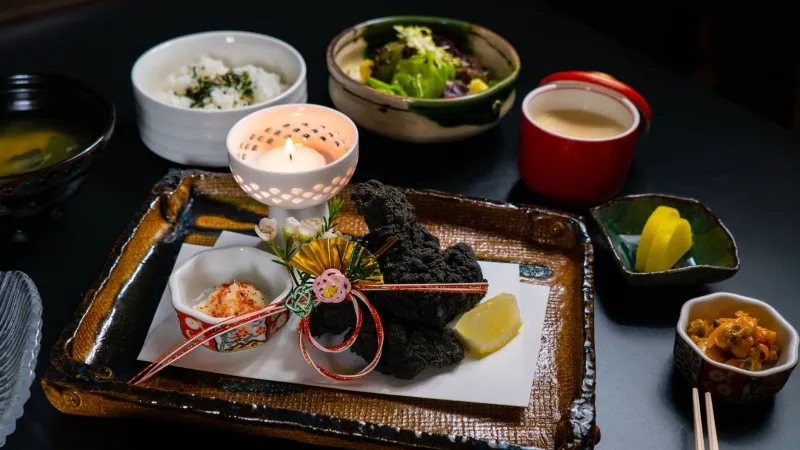
There is a particular kind of satisfaction that comes from a meal in which every element earns its place. No garnish for show. No plate crowded out of habit. Just rice, soup, fish, pickles — each item doing exactly what it was put there to do.
This is teishoku, the set-meal format that powers Japan's lunch counters and family restaurants, and it may be the best value proposition in the culinary world. For roughly the price of a fast-casual combo in the United States, a proper teishoku delivers a complete, nutritionally balanced meal assembled according to principles refined over generations. Increasingly, American diners are catching on.
What Exactly Is Teishoku?
The word translates roughly as "set meal," but the term undersells the system behind it. A traditional teishoku follows a fixed architecture:
- Gohan (rice): The centerpiece, served in its own bowl, always plain so it can anchor the stronger flavors around it.
- Shirumono (soup): Most often miso soup, with seasonal vegetables or tofu, served alongside the rice rather than before it.
- Shusai (main): Grilled salted fish (shioyaki) is the classic, though tonkatsu, simmered dishes, or tempura all appear in their own named set meals.
- Fukusai (side dishes): Pickles (tsukemono), blanched vegetables, or a small simmered dish — typically one or two small portions.
The format is less a recipe than a template, one that Japanese home cooks and restaurant kitchens apply effortlessly to whatever the season offers. Nutritionists in Japan have long praised the structure: a teishoku naturally balances carbohydrate, protein, and fermented foods without requiring anyone to count a single gram.
Why the Format Travels So Well
American dining culture has spent the past decade chasing bowls — grain bowls, poke bowls, burrito bowls. The appeal is obvious: everything in one vessel, quick service, easy customization. Teishoku is, in a sense, the original bowl, but with a crucial difference. Instead of piling components together, it keeps each element in its own dish, letting flavors stay distinct and letting the diner set the rhythm of the meal.
That separation matters more than it might seem. Pickles refresh the palate between bites of rich grilled fish. Plain rice cools and resets after a spoonful of miso. The meal becomes a sequence rather than a mash, and the whole thing feels larger than the sum of its modest parts.
There is also the matter of speed. Because teishoku kitchens prepare components in advance and assemble on order, service is famously fast without feeling rushed. For the American lunch hour, that combination — complete, balanced, on the table in minutes — is nearly impossible to beat.
Where to Find It in the United States
You no longer need a plane ticket to Tokyo. Teishoku has been spreading through American cities, often under its own name, sometimes hiding in plain sight on Japanese restaurant menus.
- Los Angeles remains the epicenter. The city's dense Japanese-American community supports restaurants serving classic shokado-style sets and grilled-fish morning teishoku that rival anything in Tokyo's business districts.
- New York has embraced the format through both dedicated teishoku shops and izakaya lunch services, where a midday set of saba shioyaki, rice, soup, and pickles can still be found for well under twenty dollars.
- Chicago, Seattle, and Honolulu all sustain strong teishoku traditions, with Honolulu in particular drawing on a plantation-era Japanese food culture that never really left.
When scanning a menu, look for the telltale vocabulary: any dish listed with the word teishoku or set, or descriptions that include rice, miso soup, and pickles together. Grilled mackerel (saba), salmon, or horse mackerel (aji) shioyaki are the canonical mains.
Building a Teishoku at Home on a Tuesday Night
The format's greatest gift to the American home cook may be its weeknight practicality. Here is a realistic template:
- Start the rice. A rice cooker or a heavy pot with a tight lid will do. This is your only true cooking project — everything else moves quickly.
- Make a fast miso soup. Dissolve miso paste in dashi (instant dashi granules are entirely acceptable), then add cubed tofu and whatever vegetable is in the crisper drawer. Never boil the miso; it kills the aroma.
- Grill or pan-sear a fish fillet. Salt it generously fifteen minutes ahead, then cook skin-side down until crisp. Salmon, mackerel, and black cod all work beautifully.
- Open a jar of pickles. Store-bought takuan or cucumber pickles are perfectly legitimate. Better yet, quick-pickle sliced cucumber in rice vinegar, salt, and a pinch of sugar while the rice finishes.
- Set it out in separate dishes. This step costs nothing and changes everything.
Total active time rarely exceeds thirty minutes, and the per-serving cost — even with quality fish — typically lands far below the twelve-dollar benchmark of a restaurant lunch.
A Format Worth Copying
American food culture loves a reinvention, but teishoku's appeal runs in the opposite direction: it asks for fidelity, not novelty. Rice, soup, fish, pickles. Balance, value, speed. Some traditions spread precisely because there is nothing to improve — only something to serve.