Broth at a Simmer, Guests at the Ready: A Host's Guide to the Donabe Table
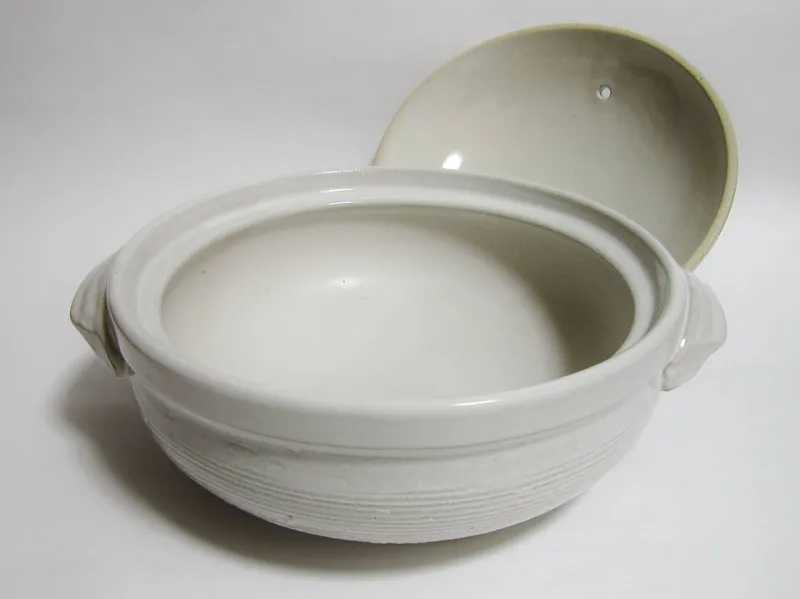
Photo: photo: Qurren (talk), CC BY-SA 3.0, via Wikimedia Commons
Every December, American hosts accept a quiet bargain: they will spend the most sociable hour of the year alone in the kitchen, basting something large. The bird, the roast, the glazed ham — each is a centerpiece that requires the host's absence. Nabemono, the family of Japanese one-pot dishes served at the table, proposes a different arrangement. The centerpiece does not need carving. It needs only a low flame and a ladle.
The Case for Letting the Table Cook
A donabe of simmering broth changes the arithmetic of a dinner party. Nothing is plated in advance. Nothing waits under foil. Guests cook their own bites in the time it takes to talk through a glass of something cold, and the pot continues to hold heat for a second and third round long after the first plates are cleared. The host sits down. This is not a small thing.
There is also a practical generosity to it. A single broth accommodates a guest who does not eat meat, a child who will accept only tofu and noodles, and an uncle who wants his beef cooked through. Shabu-shabu, yose-nabe, torinabe — the variations are menus, not recipes, and they scale upward more gracefully than a roast does.
Choosing the Vessel
Donabe are sold by capacity in go, the traditional rice-cup measure. A seven- to eight-go pot comfortably serves three or four; a nine- to ten-go pot suits five or six. Buy slightly larger than your headcount requires, since ingredients need room to be reached with chopsticks rather than crowded into a stew.
Two distinctions matter at purchase. First, a rice-cooking donabe and a hot-pot donabe are not the same object. The rice pot has a heavier lid and an interior glaze tuned for absorption; the nabe pot is wider, shallower, and built for the traffic of a table. Second, check the heat source. Many clay pots are gas-only, and only those explicitly rated for induction will survive a modern cooktop. For a dining table, a portable butane or induction burner is the usual solution, and it should be placed before guests arrive, not discovered afterward.
Regional clay bodies — Iga, Shigaraki, and others — differ in porosity and heat retention, but for a first pot the practical criteria are a well-fitting lid, an even wall thickness, and a handle or rim you can grip with a towel.
The First Hour: Seasoning and Care
The unglazed exterior of a new donabe is porous and will absorb water, which is why it must be sealed before use. The standard method is mekome: fill the pot with water and a handful of rice, or with a thin rice porridge, and bring it slowly to a bare simmer for twenty to thirty minutes. The starch fills the clay's microscopic channels and toughens the pot against thermal shock. Cool it completely before washing, and wash with water only — no soap, which the clay will remember.
Thereafter, three rules govern the pot's life. Never place an empty donabe over heat. Never add cold liquid to a hot, dry pot. Never run a hot pot under cold water. Dry it thoroughly, upside down, before storage; a donabe stored damp will smell of the meal it cooked a month ago.
Building a Broth That Can Take the Traffic
Nabe broth is deliberately understated, because everything added to it will season it further. Begin with kombu steeped cold in water for at least half an hour — roughly ten grams per liter — then warmed gently to just below a simmer and removed before the water boils. Add katsuobushi off the heat, let it settle for a few minutes, and strain. Shiitake or niboshi can deepen the base if the pot will be vegetable-led.
Season lightly with usukuchi soy, salt, sake, and a restrained spoonful of mirin. Aim for a broth that tastes slightly too delicate on its own; the cabbage, mushrooms, and meat will finish the job. Keep a pitcher of unseasoned dashi at the table to top up the pot as it reduces, and a small dish of salt for the final adjustment.
A Menu That Cooks Itself
Plan three platters rather than one. The first carries thinly sliced beef or pork, rolled loosely so a guest can lift a portion with chopsticks. The second holds chicken thigh cut into even pieces, plus a few seasoned meatballs bound with minced scallion and ginger. The third is vegetables and structure: napa cabbage, shungiku, negi, enoki and shiitake, grilled tofu, mochi, and a bundle of udon held back for the end.
Keep raw proteins on their own plates, never on the platter of vegetables that will be returned to the pot after half the table has used it. Provide slotted spoons and small bowls for skimming, and make sure each guest has two sets of chopsticks if raw meat is in play.
Sauces and the Small Things
Two dips carry most of the meal. Ponzu — citrus, soy, a little dashi — cuts richness and suits pork and vegetables. Goma dare, sesame paste loosened with dashi, soy, and a touch of sugar, suits beef and tofu. Momiji oroshi, yuzukosho, and shichimi should be on the table for those who want them, along with a bowl of finely sliced scallion. Serve each dip in individual cups; a communal bowl of ponzu is a decoration, not a sauce.
The Last Course, and the One After
When the platters are bare and the broth has grown deep and sweet, drop in the udon. The noodles will take three minutes and will be better than anything served earlier. Should the table still be hungry, cook short-grain rice separately, rinse it briefly in cold water at the end of the meal, and simmer it in the remaining broth with a beaten egg until it turns into a loose, savory porridge. This is the part guests remember, and it costs almost nothing.
Logistics for a Crowded Room
For eight or more, use two pots on two burners — one meat, one vegetable — and place them at opposite ends of the table. Put the burner down first, the pot second, and the platters where a seated guest can reach them without standing. Warm the serving bowls. And set the broth simmering before the doorbell rings, so the first thing arriving guests see is steam.