Cook the Holiday in Advance: The Case for Bringing Osechi's Make-Ahead Wisdom to Your American Table
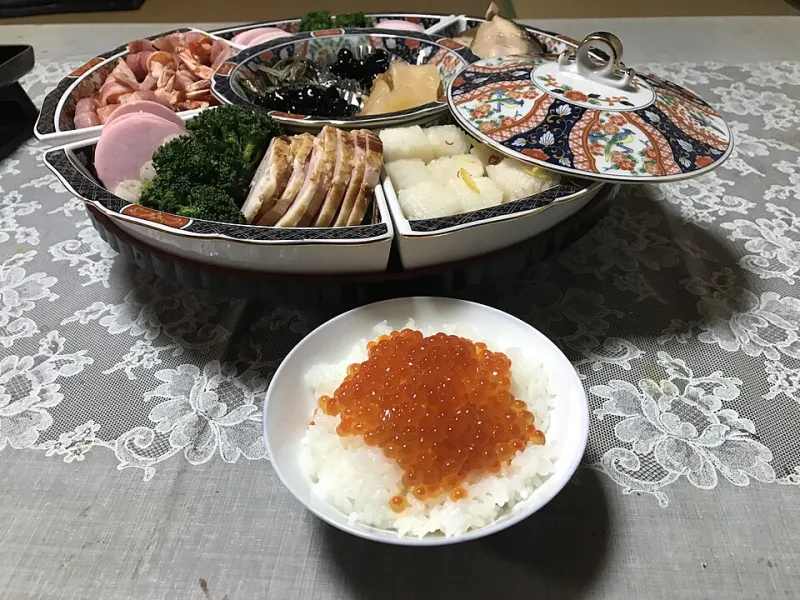
Photo: ノボホショコロトソ, CC BY 4.0, via Wikimedia Commons
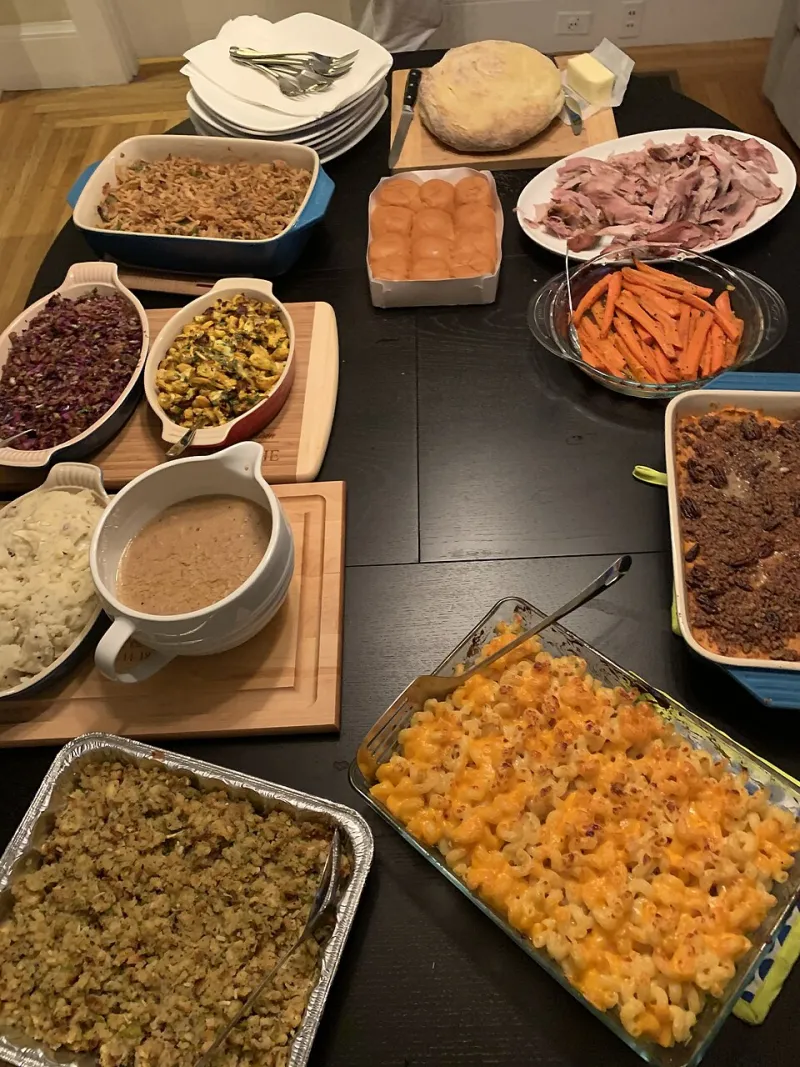
Consider the standard American holiday meal: a hostess rising before dawn, a kitchen in a state of low-grade emergency, a table crowded with dishes that all peaked forty minutes ago and are now merely warm. Then consider the alternative practiced in Japanese households every January 1st.
Osechi ryori — the ornate collection of preserved, symbolic dishes packed into tiered lacquered boxes — is prepared in the final days of December and eaten over the first days of the new year. Nothing needs reheating at the last minute. Nobody is trapped at the stove while guests gather. The celebration, remarkably, includes the cook.
Food as Good Fortune
Every dish in an osechi box carries a wish. This isn't decoration; it's the point of the tradition, and it's what transforms a make-ahead menu into something more meaningful than leftovers.
- Kuromame (sweetened black soybeans): the word for beans, mame, also means health and diligence. Eating them expresses a hope for a year of honest, energetic work.
- Datemaki (sweet rolled omelet): a golden, swirled roll whose spiral shape recalls scrolls of learning — a wish for knowledge and refinement.
- Kobumaki (kombu rolls): kobu puns on yorokobu, to rejoice. Simmered kelp wrapped around salmon or herring, tender and faintly sweet.
- Kazunoko (herring roe) and tazukuri (candied sardines) appear in traditional boxes too, though the dishes below are the practical starting point for American kitchens.
The logic is preservation: dishes built with sugar, soy, and vinegar keep for days without refrigeration-era technology. That constraint created a cuisine of depth rather than freshness — and it happens to be perfect for modern meal prep.
Three Dishes to Start With
1. Kuromame (black soybeans). Simmer dried black soybeans slowly with sugar, soy sauce, and a splash of mirin until glossy and tender — a few hours of mostly unattended cooking, ideally done two or three days ahead as the flavor deepens. The hardest part is patience, not skill.
2. Datemaki. A blend of eggs, dashi, sugar, and mirin, cooked as a thin sheet in a frying pan (a makisu bamboo mat shapes the traditional roll) or, more forgivingly, baked in a shallow pan and rolled while warm. Sweet, custardy, and striking on any table.
3. Kobumaki. Soak strips of kombu, wrap them around pieces of salmon or herring, tie with kitchen string, and simmer with soy, sake, and sugar until the kelp turns silky. Made a day or two in advance, it only improves.
Round out the box with quick wins: blanch-and-marinate vegetables (kinpira-style carrot and burdock, or spinach dressed in sesame), and good rice as the anchor.
A Different Kind of Holiday Argument
The American buffet rewards abundance; osechi rewards intention. Where the holiday table groans under fifteen simultaneous dishes, the tiered box presents a curated set — small portions, distinct flavors, a beginning and an end. Guests graze over hours rather than inhaling a single sitting.
And the deeper argument is about labor. Osechi distributes cooking across the quiet days before the celebration, so that January 1st is spent at the table, not over the range. For any American host who has missed their own party because of a roasting pan, the appeal requires no translation.
You don't need lacquerware or a Japanese grandmother's recipe notebook to begin. Three dishes, a few days of lead time, and a box with a lid will do. The new year, it turns out, tastes better when you've already done the dishes.