Soup, Rice, Pickles, Repeat: The Nine-Dollar Lunch Formula Quietly Outperforming the Downtown Salad Bar
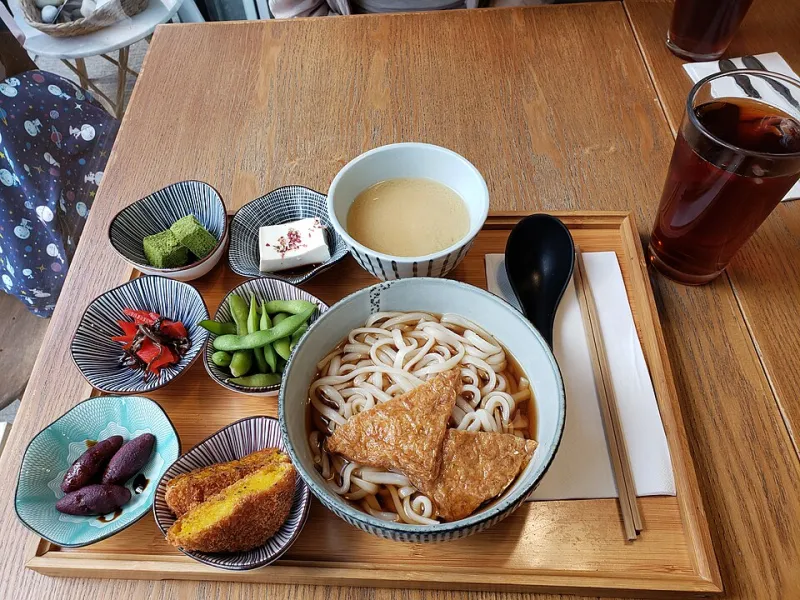
Photo: Andy Li, CC0, via Wikimedia Commons
Walk through any American business district at noon and you will see the same scene repeated on every corner: a line of professionals clutching receipts for salads that cost more than a dinner entrée did a decade ago. The average grab-and-go lunch in a downtown core now runs between fifteen and nineteen dollars, and the diner who paid for it is often hungry again by three o'clock.
There is an alternative, and it is not a new one. In Japan, the teishoku — a set meal built around rice, soup, a protein, and pickled vegetables — has anchored the midday meal for generations. Its logic is simple, economical, and, as a growing number of American office workers are discovering, remarkably easy to replicate on this side of the Pacific.
The Arithmetic of the Set Meal
Consider what a teishoku actually contains. A bowl of steamed rice. A modest portion of miso soup. A palm-sized piece of grilled fish or a serving of simmered protein. A small mound of pickled vegetables. Perhaps a shred of cabbage or a blanched green. Each element is small, but together they cover every nutritional base: carbohydrate, protein, fermented food, fiber, and vegetables.
Now price it. A bag of quality short-grain or Calrose-style rice costs about eight dollars and yields roughly twenty servings — forty cents per bowl. A tub of miso paste runs five dollars and makes thirty or more bowls of soup, roughly seventeen cents each once you add dashi and a few cubes of tofu. A head of cabbage costs two dollars. A fillet of frozen mackerel or salmon runs two to three dollars. Add cucumbers for quick pickles and a bottle of rice vinegar, and the per-meal cost lands between six and nine dollars.
Compare that with the eighteen-dollar salad bar, which delivers mostly raw vegetables, a scattering of add-ons billed by weight, and a dressing that often contains more sugar than the miso paste ever would.
converts: The Converts
Marcus Bell, a project manager in Chicago, made the switch eighteen months ago after a business trip to Osaka. "I ate teishoku lunches every day for a week in Japan and spent less than I do on one salad back home," he says. "Now I make rice the night before, and my morning routine is two minutes of soup assembly. My afternoon energy is completely different. There's no crash."
In Austin, elementary school teacher Dana Whitfield prepares what she calls "Texas teishoku" — rice, miso soup with local kale instead of spinach, and quick-pickled jalapeño cucumbers. "The pickles are the part I didn't expect to love," she says. "They wake up the whole meal. And because everything is portioned by nature — one bowl of this, one small plate of that — I stopped overeating at lunch entirely."
Their experience reflects a broader pattern. The structure of the set meal, with its built-in variety and defined portions, does something a single-container lunch cannot: it makes a modest amount of food feel complete.
Three Formulas Under Ten Dollars
The beauty of the teishoku framework is its flexibility. Once the template is in place — grain, soup, protein, pickle — the components can rotate with whatever is on sale.
The Weekday Classic. Steamed rice, miso soup with silken tofu and scallion, pan-seared salmon seasoned with soy and a touch of mirin, and cucumber pickled in rice vinegar. Approximate cost: $8.40 per serving using fresh fish; under $6 with frozen.
The Pantry Play. Rice, miso soup, a fried egg with crisp edges laid over the grain, shredded cabbage dressed in sesame and soy, and store-bought or homemade pickles. This version costs about $3.50 and comes together in twelve minutes, most of it hands-off.
The Comfort Set. Rice topped with leftover rotisserie chicken warmed in a soy-dashi sauce, miso soup with wakame seaweed, and pickled carrots. A genuine strategy for stretching a five-dollar grocery-store bird across four lunches.
A Note on Method
Two small habits make the routine sustainable. First, cook rice in batches and refrigerate it; reheated briefly, day-old short-grain rice holds its texture better than most people expect. Second, make pickles on Sunday — sliced cucumber or carrot submerged in vinegar, a pinch of salt, and a little sugar need only a few hours to become the bright, acidic counterpoint that ties the whole tray together.
The salad bar will still be there tomorrow, charging eighteen dollars for what it has always charged. The set meal asks for a small investment of Sunday afternoon and about nine dollars a day — and returns a lunch that is warmer, more balanced, and, according to those who have made the switch, far less likely to leave you counting the hours until dinner.