From the Soup Bowl to the Butter Board: How Miso Quietly Conquered the American Pantry
Walk into any well-stocked grocery store in Chicago, Portland, or Brooklyn these days and you will find it: a squat plastic tub sitting somewhere between the tofu and the tahini, labeled with a word most Americans first encountered in a Japanese restaurant. Miso has arrived. And it did not arrive as a soup base.
It arrived as a seasoning — one that chefs from San Francisco to Austin have spent the last decade quietly folding into butter, caramel, salad dressing, and even ice cream. Understanding how a fermented soybean paste crossed that line from foreign curiosity to pantry staple says a great deal about where American cooking is headed.
What Miso Actually Is
At its core, miso is remarkably simple: soybeans, a mold-cultured grain called koji (usually rice or barley), salt, and time. The mixture ferments anywhere from a few weeks to several years, and the length of that fermentation determines nearly everything about the final product — its color, its saltiness, its depth.
In Japan, miso is not a single ingredient so much as a family of them. Every region keeps its own style, and many households still order custom batches from local producers. That diversity is precisely what makes miso so useful in an American kitchen: there is a version for almost every purpose.
The Three Tubos Worth Knowing
White miso (shiro miso). Fermented briefly, often just a few weeks, white miso is pale, mildly sweet, and low in salt. It is the most forgiving variety and the best starting point for newcomers. Use it where you would use a condiment rather than a seasoning: whisked into vinaigrettes, blended into mashed potatoes, spread under the skin of a chicken before roasting.
Red miso (aka miso). Aged longer, red miso carries real weight — saltier, earthier, more assertive. It stands up to red meat, roasted root vegetables, and long-braised dishes. A spoonful deepens a beef stew or a mushroom ragù the way anchovies do for Caesar dressing: invisibly, but unmistakably.
Aged or barley miso (mugi miso and beyond). The deepest end of the pool. Barley miso, common in southern Japan, ferments for a year or more and develops a malty, almost savory-sweet complexity. Chefs treat these older misos like aged cheese or fine soy sauce — something to dab, not pour.
Beyond the Broth: Where American Cooks Are Using It
The most instructive thing about miso's American career is how far it has traveled from the soup bowl. Consider a few applications now common on restaurant menus and increasingly in home kitchens:
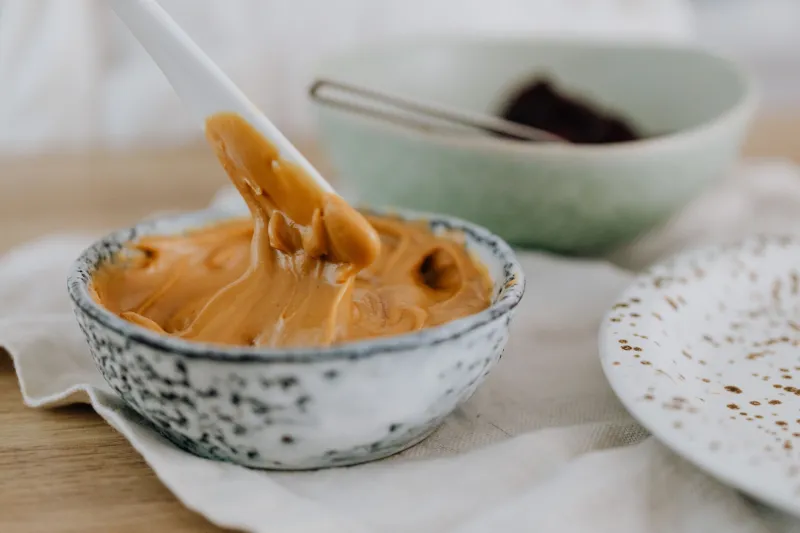
- Miso butter. Softened butter whipped with white miso and brushed over corn on the cob, seared salmon, or a simple roast chicken. Arguably the single highest-return trick in the modern miso repertoire.
- Miso caramel. Salt, umami, and sugar in one spoonful. Pastry chefs from Los Angeles to New York have put miso caramel on everything from apple pie to brownies, and the logic is sound: miso amplifies caramel's burnt-sugar notes the way flaky salt does, only deeper.
- Marinades and glazes. Miso's enzymes tenderize while its salt seasons. The classic Japanese pairing — miso-glazed black cod — has become a fixture on American menus, but the same technique works beautifully on pork shoulder, eggplant, or halibut.
- Salad dressing. Miso, rice vinegar, a little honey, and neutral oil produce a dressing with more body and longer finish than most dairy-based alternatives.
The pattern across all of these is consistent: miso rarely announces itself. It works the way good soy sauce or fish sauce works — as a background note that makes everything around it taste more like itself.
An American Miso Movement Takes Root
Perhaps the most interesting development is not importation but production. A new generation of domestic fermenters — small operations in Vermont, Northern California, the Pacific Northwest, and the Hudson Valley — is making miso with American-grown soybeans, chickpeas, and even local grains. Some producers are aging miso in bourbon barrels or blending it with smoked malt, experiments that would baffle a traditional Kyoto master but are producing genuinely exciting results.
This matters for more than novelty. Miso is a living food, and domestic production shortens the distance between fermentation and table. It also invites American cooks to think of miso not as a Japanese import to be used deferentially, but as a pantry ingredient with its own American future — the way soy sauce, sriracha, and gochujang each found one before it.
A Practical Primer for Your First Tub
If you are buying miso for the first time, keep three things in mind. First, start with white miso; you can always move toward the bolder varieties once you understand its behavior. Second, know that miso is salty — taste as you go and reduce the added salt in any recipe accordingly. Third, protect its living character: prolonged boiling dulls miso's aroma and flavor, so add it at the end of cooking or in applications where it is not subjected to hard heat for long.
Store it in the refrigerator with the surface covered in plastic wrap pressed directly against the paste. Properly kept, it will last for months and, like most fermented foods, only grow more complex.
An Ingredient Worth the Counter Space
Miso's rise in America is not a trend so much as a correction. For decades, American kitchens lacked a ready-made umami paste — something that could deepen, salt, and round out a dish in one motion. Japanese cooks have relied on one for more than a thousand years. The tub finally sitting in your grocery's refrigerated case is not exotic. It is, quite possibly, the most efficient ingredient you are not yet using.