Service That Anticipates: How Omotenashi Is Quietly Redefining the American Dining Room
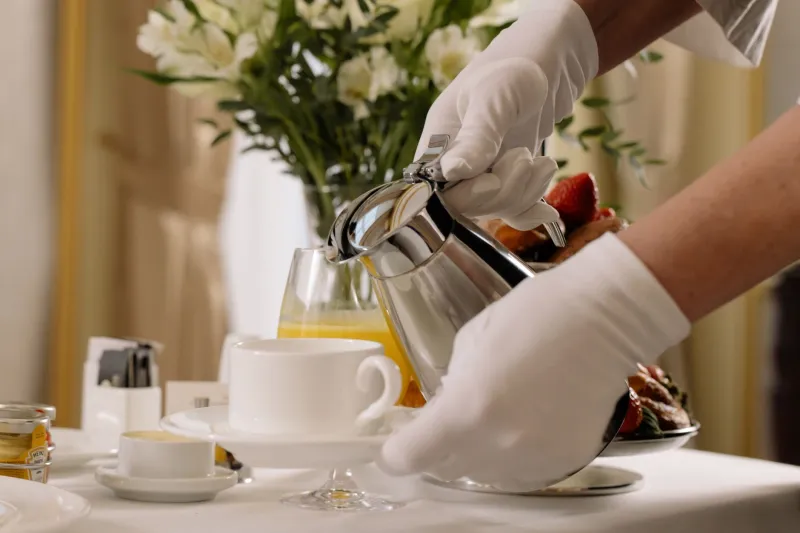
There is a moment familiar to anyone who has dined well in Tokyo: you reach for your water glass, and it is already being refilled. You glance toward the door, and your coat is waiting. You never asked for any of it. Nobody announced it. The meal simply unfolded as though the restaurant had been quietly studying you for years.
This is omotenashi — the Japanese discipline of hospitality that anticipates a guest's needs before the guest can articulate them, and does so without expectation of thanks. Loosely translated as "selfless service," the word traces its roots to a tea ceremony term describing the careful, wholehearted arrangement of everything a guest might require. In practice, it is less a service style than a disposition: attentiveness performed invisibly, with the server's own comfort subordinated to the guest's experience.
Across the United States, from omakase counters in Manhattan to neighborhood izakaya-inspired rooms in Portland and Chicago, that disposition is being studied, taught, and — increasingly — demanded by diners.
Why American Service Is Ready for a Rethink
The traditional American service model has long been built on a particular bargain: servers perform warmth, guests reward it with tips, and the transaction shapes everything that follows. It is a system that can produce dazzling hospitality, but also its caricature — the server who interrupts every third bite to ask how everything tastes, the upsell disguised as a recommendation, the forced chirpiness that reads as performance rather than care.
The pandemic-era labor crisis exposed the fragility of that model, and the quiet movement away from tipping in some fine-dining rooms opened space for something different. What many restaurateurs found, somewhat to their surprise, was that the alternative they were searching for had already been codified centuries ago.
Omotenashi offers a service philosophy without the transaction at its center. The reward is not the tip; it is the guest's unhurried contentment, and the reputation that follows. Because nothing is being sold tableside, attention can be redirected from persuasion to perception — reading a table's energy, noticing the guest who keeps glancing at the time, understanding that the couple on a first date needs less interruption than the regulars at the counter.
What Omotenashi Looks Like in an American Restaurant
The principles translate across price points. At a high-end omakase counter, omotenashi might mean the chef notices a guest hesitating over a piece of nigiri and adjusts the pacing without a word. But the same philosophy surfaces in humbler settings:
- Anticipation over reaction. Water glasses refilled before they empty; chopstick rests replaced the instant one is knocked askew; a child's meal paced to arrive first, unprompted.
- Invisibility. Great service in this tradition draws no attention to itself. If you leave thinking about the staff, something has gone slightly wrong.
- Consistency regardless of the guest. The first-time visitor and the weekly regular receive the same quality of care. There is no hierarchy of spend.
- Wholeness of detail. In Japanese service culture, even the manner in which a bill is presented — face down, discreetly, without ceremony — is part of the hospitality.
American restaurateurs who train staff in these principles often describe it as a shift in what service staff are asked to notice. Rather than memorizing upsell scripts, servers learn to read the room: posture, pacing, eye contact, the half-finished dish that signals a palate losing interest. The training is closer to hospitality as observation than hospitality as performance.
The Tipping Question, Honestly Considered
It would be dishonest to suggest omotenashi and American tipping culture are easily reconciled. A system in which income depends on the guest's discretionary payment naturally rewards visible, charming service — the very thing omotenashi seeks to make unnecessary. Some US restaurants committed to the philosophy have responded with no-tipping models and service charges, allowing staff to practice anticipatory care without an implicit ask hanging over every interaction.
Others simply layer the philosophy onto the existing system, and the results are instructive either way. What diners consistently report in rooms practicing omotenashi well is a feeling of being looked after rather than served — a subtle but real distinction that guests remember long after the food itself fades.
How to Recognize — and Expect — This Level of Care
For the American diner, omotenashi offers a useful new benchmark. When you next sit down to eat, notice:
- Timing. Did the room anticipate your rhythm, or interrupt it?
- Attention without intrusion. Were needs met before they were voiced, without the server hovering?
- Equality of treatment. Were you cared for as a guest, or sized up as a check average?
- The details no one had to do. The folded napkin replaced while you stepped away. The recommendation suited to you, not to the nightly sales goal.
None of this requires a tasting-menu budget. A ramen shop run in the omotenashi spirit will out-hospitalize a steakhouse with a sommelier and a script.
A Standard Worth Importing
American dining has never been shy about borrowing — from France its technique, from Italy its conviviality. Omotenashi may prove the most valuable import yet precisely because it asks nothing of the guest at all. It is hospitality stripped of performance, service as a form of respect rather than persuasion.
At Daikoku Ginza, we believe that understanding a cuisine means understanding the culture of care that surrounds it. The food on the plate is only half the meal. The other half is how it reaches you — and whether, when you look up, everything you needed was already there.