The Loaf That Broke the Internet's Bread Algorithm: A Serious Look at Shokupan's American Reign
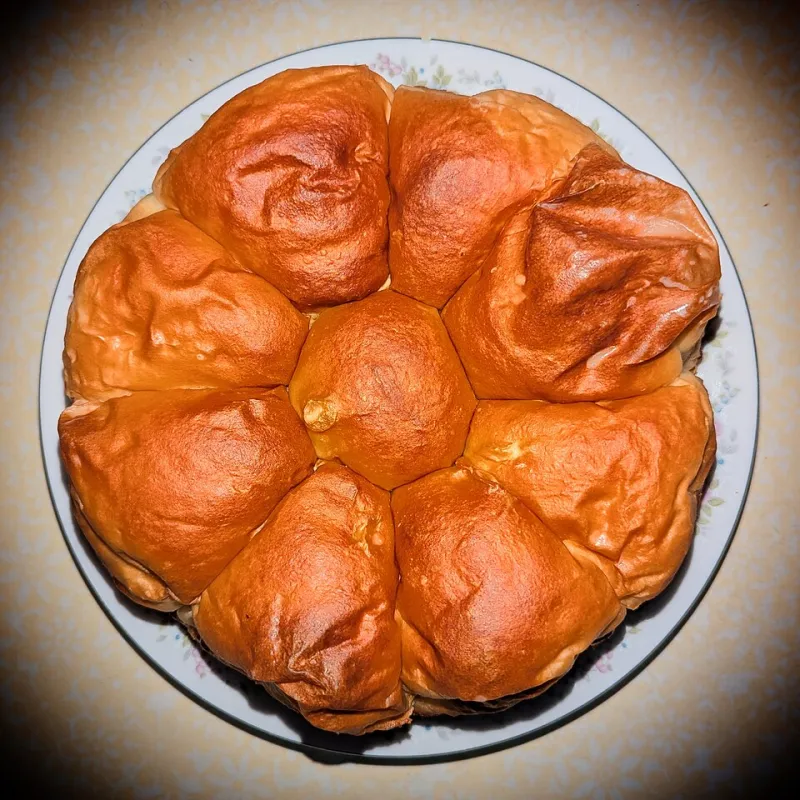
Photo: Daderot, CC0, via Wikimedia Commons
There is a particular kind of American food trend that announces itself loudly — the limited drop, the overnight queue, the influencer unboxing. Then there is shokupan, which arrived the way good bread always does: quietly, slice by slice, until one day your grocery store in Ohio stocks it and nobody remembers when that started.
Japanese milk bread is not, on its face, dramatic. It is a plain white loaf, pullman-shaped, without seeds or sourdough swagger. But tear a piece and you understand immediately. The crumb stretches like cotton. It compresses under your fingers and springs back. Toasted, it crisps at the edges while the interior stays pillow-soft. Nothing in the standard American bread aisle behaves this way.
The Technique Behind the Softness
The secret is tangzhong, a paste of flour and liquid cooked briefly on the stovetop before being added to the dough. Gelatinizing the starch ahead of time lets the flour absorb and hold more water, producing a dough that stays moist for days rather than turning to rubble by Tuesday.
The method has deep roots in Japanese home baking, where it circulated in cookbooks and community kitchens long before it had an English name. American flour brands eventually caught on — King Arthur and others now publish tangzhong adaptations of standard recipes — and with them came the mainstreaming of what was once a technique passed along by obsessive home bakers on internet forums.
Add milk, a touch of sugar, and butter to the formula, and you get shokupan proper: enriched, faintly sweet, and structured well enough to hold a thick-cut slice of French toast without surrendering.
Homemade Versus Store-Bought: A Practical Comparison
We baked side by side with a commercial loaf to see whether the home effort pays off.
Crumb and texture. The homemade loaf won on openness and tenderness, though the gap narrowed after day two — a testament to how well tangzhong preserves moisture either way.
Flavor. Store-bought shokupan tends toward uniform sweetness; the homemade version, made with good butter and whole milk, had noticeably more character.
Effort. This is the honest trade-off. Tangzhong adds twenty minutes and a cooling period, and enriched doughs demand a proper knead. Total project time: about four hours, most of it inactive.
Cost. A homemade loaf runs roughly three dollars in ingredients against seven to twelve at a bakery counter. For households that go through bread quickly, the math favors the oven.
Verdict: bake it on a weekend, buy it on a Wednesday. Both are legitimate; only one fills the kitchen with the smell of warm milk and butter.
Why Sandwich Bread Matters More Than Sourdough Status
American bread culture has spent a decade celebrating the extreme — hydration percentages, 48-hour ferments, crusts that fight back. All worthy pursuits. But most bread consumed in this country is sliced, filled, and eaten at a desk or a kitchen counter. That bread deserves the same engineering attention as a showpiece boule.
Shokupan is exactly that: bread optimized for the sandwich, the toast, the after-school snack. Its rise in American kitchens reflects a quiet shift in values — away from performance baking and toward food that improves ordinary days.
The loaf that took over the internet did so not by being loud, but by being, slice after slice, genuinely better. There may be no more Japanese lesson in American baking than that.