Small Plates, Long Nights: The Quiet Rise of the American Izakaya
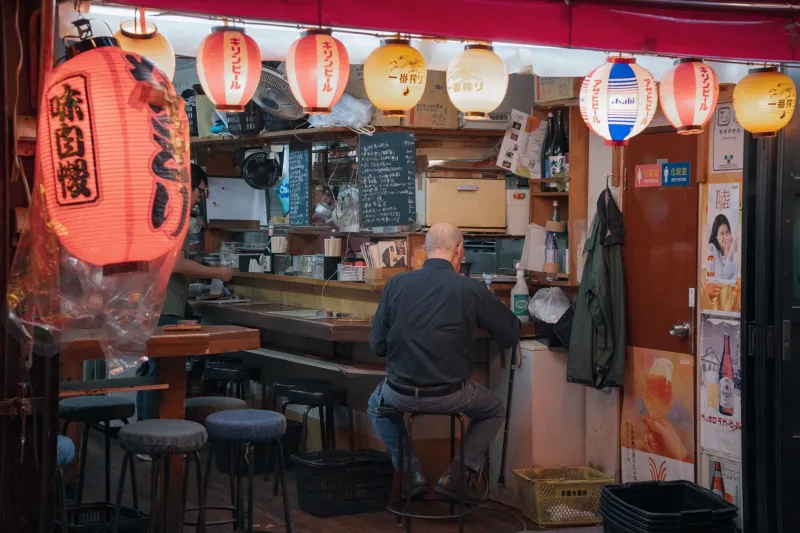
There is a particular moment that repeats itself in American cities from coast to coast: the office crowd thins out, the dinner reservation feels too formal, the neighborhood bar feels too empty, and somewhere in between, a red lantern glows above a doorway. Inside, the smell of grilled chicken skin and soy-sweet glaze hangs in the air, sake pours by the glass, and nobody minds if you stay for two hours over six small dishes.
This is the izakaya, and it is having an American moment.
A Format Built for the Way People Actually Eat
The izakaya — literally a place to stay and drink sake — began centuries ago as a simple service attached to sake shops, offering a bite to accompany the drink. Modern Tokyo turned it into an institution: casual, warm, endlessly flexible. Diners order as they go, dishes arrive when they're ready, and the evening unfolds at its own pace.
What is striking about the izakaya's American expansion is how well it solves problems American hospitality has long struggled with. The traditional three-course dinner can feel like a commitment; the bar with a bowl of nuts feels like a non-event. The izakaya sits precisely in the middle — serious food, informal structure. You can spend forty dollars or a hundred and forty. You can arrive at six or at ten. You can order a single skewer or settle in for a marathon.
Cities with strong Japanese communities led the way. Los Angeles's Sawtelle corridor and San Fernando Valley have supported izakaya for decades, from legendary spots like Hurry In Toriyoshi-style yakitori dens to the late, beloved Shin-Sen-Gumi outposts. New York's East Village became a hub with places like Sakagura and the ever-popular Sake Bar Decibel, a basement institution where the walls fill with handwritten messages and the sake list runs deep. Seattle, Portland, Chicago, and Austin have all developed their own scenes, often in unassuming strip malls or second-floor walkways that first-timers walk past twice before finding the door.
That discretion, ironically, is part of the appeal. The best izakaya feel like a discovery — a reward for the curious.
Why This Import Took Root Where Others Withered
American dining history is littered with imported concepts that arrived with fanfare and faded within a season. The izakaya's success suggests the format was never a trend but a correction. Several structural advantages explain its staying power.
First, economics. Small plates and skewers keep food costs manageable and kitchens nimble. A yakitori counter needs charcoal, skill, and little else. For operators facing America's brutal restaurant margins, the izakaya model — high seat turnover, strong beverage attachment, modest kitchen footprint — is quietly brilliant.
Second, social fit. The izakaya is communal without being compulsory. Unlike the tasting menu, there is no shared surrender of control. Unlike the sports bar, conversation is not competing with fifty televisions. The noise level, the clinking of glasses, the steam rising from a cast-iron pot of motsunabe — it all encourages people to stay.
Third, the drink program. Sake by the glass, once a novelty, is now a category American distributors have embraced, with imports from Yamagata, Niigata, and Nagano appearing on lists nationwide. Highballs — whiskey and soda, the izakaya workhorse — have become a genuine American cocktail trend, appearing on menus far removed from Japanese cuisine. The izakaya did not chase the American palate; the American palate came to it.
Etiquette for the First-Timer
No formal dress code or ritual governs the izakaya, but a few customs will make a first visit smoother — and will earn a nod from the staff.
- Order as you go. Dishes arrive when ready; the kitchen paces itself. Order two or three items, eat, then continue. Never order everything at once.
- Say "kanpai," not "cheers," if your table offers a toast — and wait for it before the first sip.
- Otoshi is not a scam. Many izakaya present a small complimentary-seeming dish at the start. It is a table charge, in edible form, usually a few dollars. Accept it graciously.
- Sharing is the default. Plates are placed centrally and everyone reaches in. Do not build a moat around the karaage.
- Loud is fine. Unlike fine dining, the izakaya tolerates — even encourages — animated conversation. This is where colleagues become friends.
- Close with carbs. A bowl of rice or noodles at the end of the night, the traditional otsumami-to-shime finish, is the izakaya equivalent of a nightcap.
Tipping follows standard American practice at US establishments, though counter service at the smallest spots may include it — ask if unsure.
A Neighborhood Institution in the Making
What the izakaya offers, ultimately, is a third place that America has been short on: somewhere between the restaurant and the bar, open late, priced flexibly, and built around the idea that food tastes better when the evening has no schedule. Its Japanese pedigree is not a marketing veneer but the source of its logic — the same philosophy that shapes a Tokyo lantern-lit alley applies in a Los Angeles strip mall.
For American diners who have not yet made the leap, the invitation is simple: find the red lantern, sit at the counter, order the skewers, and let the night decide how long it lasts.